Lion’s Mane Mushrooms in a Christchurch Supermarket: What Does ‘NZ Grown’ Mean for Hericium?
A photographed retail product raises a scientific and regulatory question. The photographs alone cannot establish that any law has been broken.
Lion’s Mane is a familiar name in the international gourmet mushroom market. In New Zealand, identifying which species is being discussed matters when considering cultivation, importation and biosecurity rules.
The contributor describes these photographs as taken at Sunson Asian Market in Christchurch’s Church Corner area. The images show a white mushroom product displayed beside a handwritten sign saying “Mushroom Lion” and $29.99 per bag. Its package reads “Mushroom Lion 500G” and “NZ Grown”, with Healthy n Fresh branding and an Auckland contact address. This describes visible labels and the contributor’s account of the location; it does not independently verify the product’s origin, species or regulatory status.
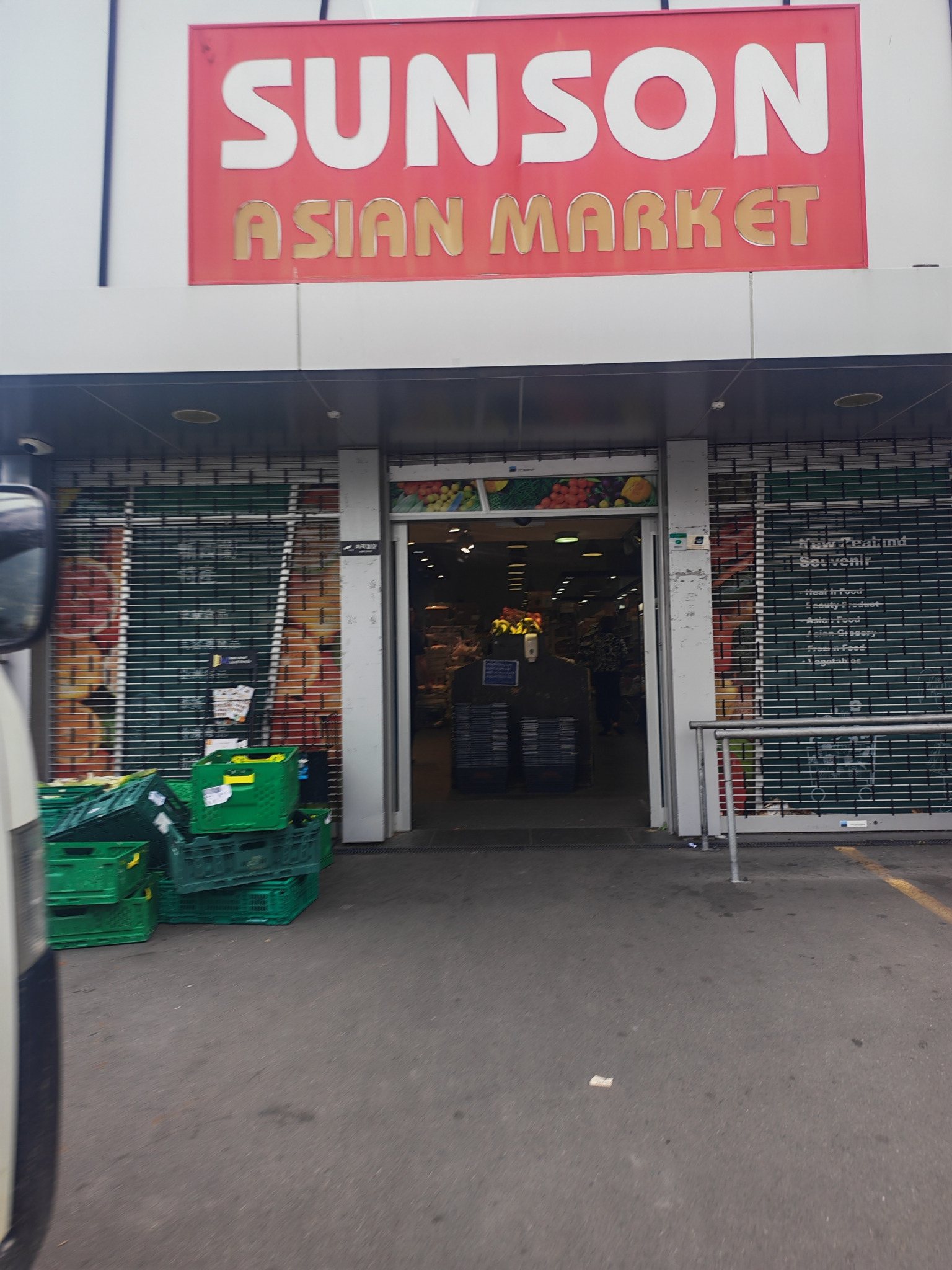 Supplied photograph of the Sunson Asian Market storefront.
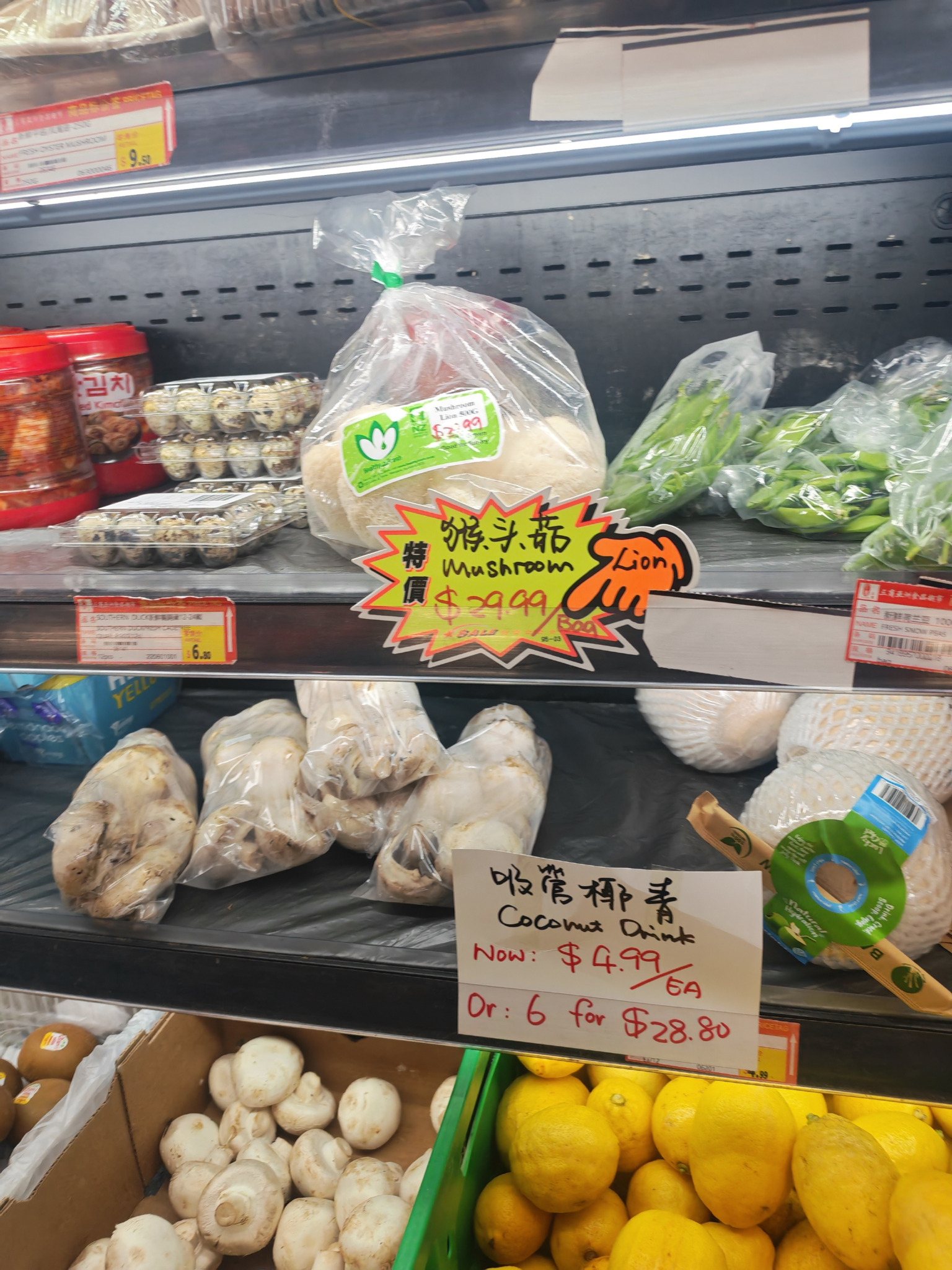 Supplied photograph of the display and its $29.99 sign. The sign does not identify a scientific species.
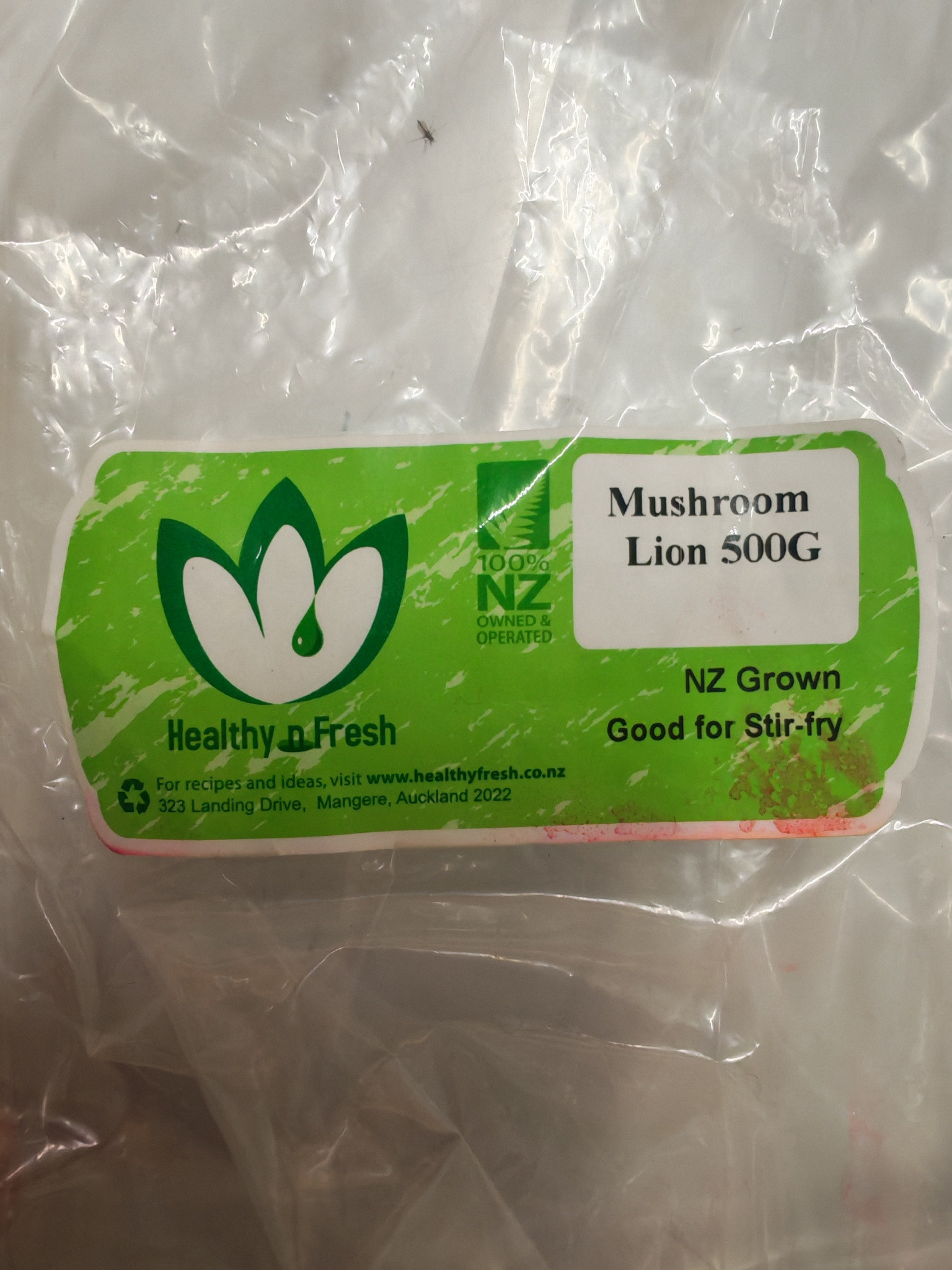 Supplied close-up of the package label. “NZ Grown” is the label’s claim; we have not independently checked it.
Why the scientific name matters
“Lion’s Mane” is a common name, not a species-level identification. Internationally it often refers to Hericium erinaceus, which typically forms a rounded mass with hanging spines. Other species in the genus, including Hericium coralloides, can have a more branching, coral-like appearance.
The photographed product is marketed as Lion’s Mane and its appearance is compatible with a Hericium-type fungus, but the images are not diagnostic of a species. The visible package does not give a scientific binomial. A reliable determination would need better evidence, such as an expert examination, producer documentation or molecular identification. Our species overview explains why names and identification matter more broadly.
What New Zealand’s mushroom import guidance says
The Ministry for Primary Industries (MPI) publishes an eligible-species list for importing edible fungi for growing or propagation. It covers mother cultures, spawn and inoculated substrate. Hericium erinaceus does not appear on that current list. In a 2024 draft consultation about mushroom-spawn imports, MPI placed H. erinaceus on a proposed ineligible list with the reason “Not present in New Zealand.” That consultation list was a proposal, not a final determination about this photographed product.
There has been a further proposal since that consultation. In 2026, MPI consulted on bringing mushroom mother cultures, spawn and inoculated substrates into a proposed import health standard called SPECHUMN.ALL. As checked on 13 November 2026, MPI’s public fungi-for-growing instructions still link to the existing Microorganisms from All Countries standard, while the newer SPECHUMN.ALL page remains labelled a draft consultation. Neither proposal establishes the identity or legal status of these retail mushrooms.
These pathways must be kept separate. Requirements for importing living cultures, spawn and inoculated substrate are not interchangeable with those for fresh fungi imported as food, processed mushrooms, or mushrooms already being cultivated in New Zealand. Absence from a propagation-import list does not, by itself, establish that a fresh supermarket product is unlawful.
The Environmental Protection Authority (EPA) explains that importing, developing, field-testing or releasing an organism requires approval if it is both a new organism and viable. Whether those criteria or any existing approval apply to a particular species and activity cannot be determined from this package photograph. See our New Zealand biosecurity and regulations guide for the wider framework.
What does “NZ Grown” establish?
The package reads “NZ Grown.” If accurate, that would point to cultivation in New Zealand rather than importation of the finished mushrooms as fresh food. It does not identify the scientific species, the grower, the source of any culture, or the permissions that may apply.
The label also names Healthy n Fresh and gives an Auckland address. A brand or distributor address should not be assumed to be the production site.
What is established, and what remains unknown?
Visible in the supplied photographs: a Sunson storefront; a retail display marked “Mushroom Lion” and $29.99; and a package printed “Mushroom Lion 500G,” “NZ Grown” and Healthy n Fresh. The contributor identifies the location as Church Corner, Christchurch.
Supported by government guidance: MPI’s current propagation-import list does not include H. erinaceus; its 2024 draft listed that species as not present in New Zealand; a separate 2026 import-standard proposal concerns mushroom propagation material; and EPA approval rules turn on the identity and new-organism/viability status of an organism.
Not established: the product’s scientific identity; whether its NZ-grown claim is accurate; who cultivated it or where; the origin of any culture; whether any approval, exemption or other permission applies; or whether the retailer, supplier or grower breached any rule.
Appearance-based suspicion is not proof of misconduct, and an import list cannot substitute for a case-specific regulatory determination.
Why transparency matters
Species-level information helps growers, importers, retailers and consumers understand what they are handling. New Zealand’s biosecurity controls address risks from introducing organisms, while food and import rules may apply separately depending on the product and its origin.
A useful next step for anyone investigating a product like this would be to establish its scientific identity and producer information, then compare those facts with current MPI and EPA requirements. Until then, the photographs raise a question for further investigation but do not prove illegal sale or cultivation.
References
- MPI — Steps to importing fungi for growing
- MPI — 2024 consultation on species for a mushroom-spawn standard
- MPI — 2026 draft standard for specified animal products for human use
- MPI — Risk-management proposal, including mushroom propagation material
- EPA — Do you need an approval?
- MPI — Importing fresh fruit and vegetables, including fungi
Editorial note (13 November 2026): This article describes supplied photographs and published government guidance. It does not assert that Sunson Asian Market, Healthy n Fresh or any grower committed an offence. The photographed product’s species and regulatory status have not been independently confirmed.