New Zealand species and biosecurity
Oyster Mushrooms in New Zealand: Species, Cultivation and Biosecurity
“Oyster mushroom” and labels such as “blue”, “grey” or “pink” are useful market descriptions, but they are not dependable species identifications. New Zealand has indigenous Pleurotus diversity as well as cultivated exotic species, and recent DNA research shows why strain provenance matters.
The short answer
A 2024 University of Canterbury thesis and a 2026 peer-reviewed paper substantially improve the picture. They distinguish an indigenous New Zealand lineage now named Pleurotus pulmonarius var. aotearoa from international cultivated P. pulmonarius, and separate indigenous P. parsonsiae from true cultivated P. djamor. This is a stronger foundation than colour, vendor labels or single-marker matching alone.
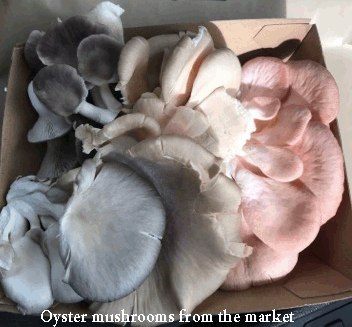
Which oyster mushrooms are recorded or cultivated here?
The table below combines current Manaaki Whenua Biota of New Zealand records, EPA decisions and recent research. “Indigenous”, “present”, “cultivated” and “eligible for import” are not synonyms.
| Taxon | Current New Zealand picture | Practical meaning |
|---|---|---|
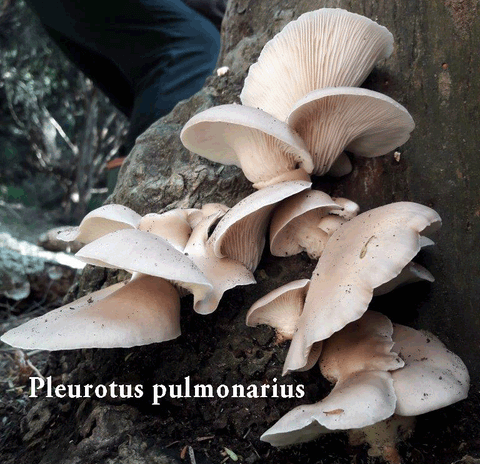
| P. parsonsiae | Biota NZ records it as indigenous, non-endemic and present; it also occurs in Australia and Pacific islands. It belongs to the P. djamor complex. | Calling it uniquely endemic to New Zealand is no longer accurate. A New Zealand type specimen does not by itself prove every cultivated pink or pale strain is this species. |
| P. purpureo-olivaceus | Present, with a New Zealand holotype; Biota NZ lists origin as uncertain because related material may also occur overseas and differs morphologically and phylogenetically. | The species is strongly associated with New Zealand records, especially southern-beech wood, but “endemic” should be used cautiously under the current database entry. |
| P. australis | Indigenous, non-endemic and present in New Zealand; the type locality is Australia. | A native species shared with Australia and other Pacific records, not an introduced commercial strain merely because it resembles an oyster mushroom. |
| P. pulmonarius var. aotearoa | Described in 2026 as an indigenous New Zealand variety supported by multi-gene phylogeny and morphology. | Older references to a “native P. pulmonarius” can now be stated more precisely. It should not be assumed genetically equivalent to international commercial P. pulmonarius. |
| International P. pulmonarius | Present in cultivation and listed by EPA; MPI currently allows import under its fungi-for-growing pathway. | The scientific name must be verified. Import requires an MPI permit, supplier documentation and border clearance. |
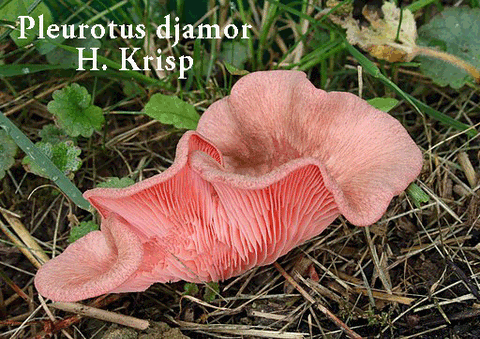
| P. djamor | Present in cultivation and on EPA/MPI lists. Biota NZ notes a species complex; recent research distinguishes true exotic P. djamor from indigenous P. parsonsiae and reports no confirmed wild New Zealand population of true P. djamor in the material studied. | “Pink oyster” is not enough to decide identity or origin. Cultivation is permitted through the applicable pathway, while escape and hybridisation remain legitimate research questions. |
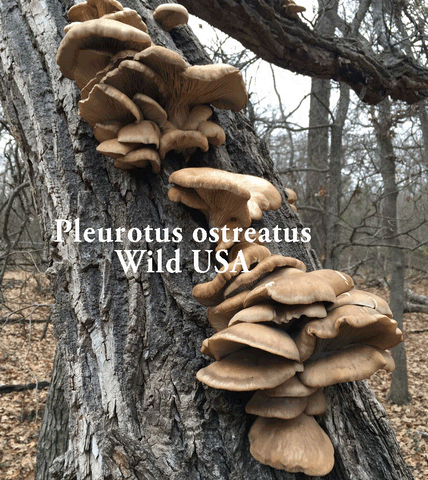
| P. ostreatus | EPA determined in 2019 that it was present before 29 July 1998 and is therefore not a new organism. Biota NZ treats the accepted species as exotic and cultivated here. | It is import-eligible under current MPI rules. The EPA decision does not turn every “blue oyster” label into a confirmed P. ostreatus identification. |
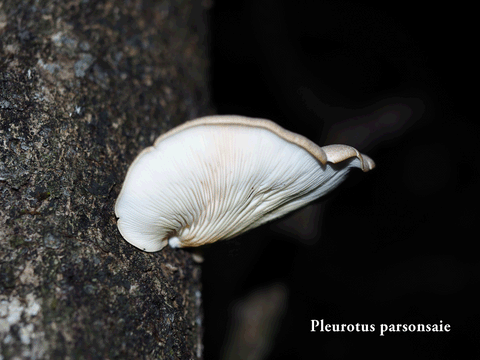
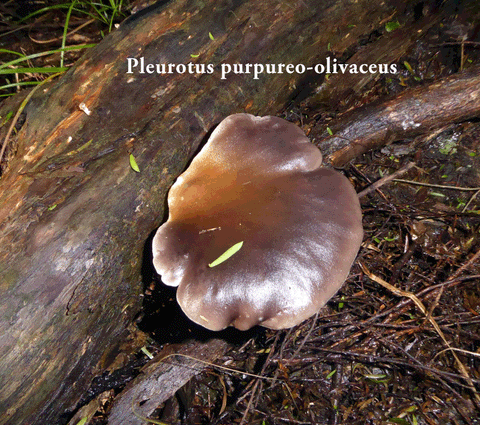
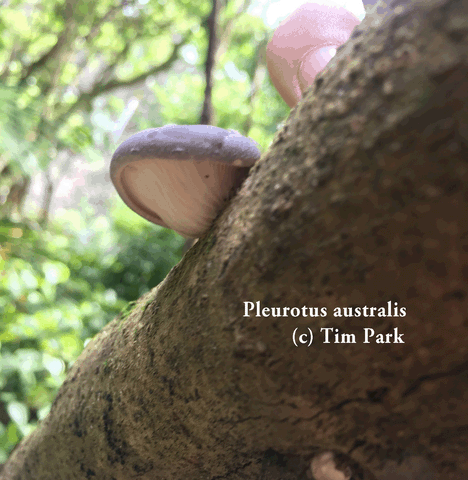

Why “blue oyster” is not a species identification
Cap colour changes with genetics, temperature, light, humidity and age. “Blue oyster” is used commercially for more than one lineage and has no fixed taxonomic boundary. Even the name P. ostreatus has been misapplied in New Zealand: Biota NZ notes that older environmental records under that name were later assigned to P. purpureo-olivaceus or P. australis.
MPI's consultation on mushroom-spawn imports disclosed a practical example: genetic tests on recently imported oyster spawn did not match the older specimens used to establish that P. ostreatus was already present. This did not identify the material publicly as an unlawful species, but it shows why a label and one familiar-looking crop are insufficient.
How could an unverified culture affect indigenous oyster fungi?
The ecological concern is a chain of events: release, survival, establishment, and then competition or gene flow. Fertile Pleurotus crops release airborne spores. Repeated fruiting across many commercial blocks and home grow kits creates more opportunities for those spores to reach suitable woody habitat. Hera's 2024 New Zealand thesis identifies spore dispersal from home and commercial cultivation as the likely invasion pathway for cultivated P. djamor, while also stating that more research is needed. Release is not the same as invasion: spores must still survive, establish and reproduce in the wild.
Competition for woody habitat
If an exotic culture establishes, it could colonise dead or dying wood also used by indigenous Pleurotus and other decomposer fungi. Capturing fresh substrate first, or prevailing when mycelia meet inside wood, could reduce opportunities for resident fungi and change the decay community. This mechanism is biologically credible, but the New Zealand research cited here has not shown a commercial oyster culture displacing an indigenous Pleurotus population.
A North American study shows why the pathway deserves attention: cultivated golden oyster mushroom, P. citrinopileatus, escaped and spread widely, and colonised elm wood had altered fungal-community composition and lower fungal species richness. That is evidence that an escaped cultivated oyster fungus can affect a wild wood-decay community under some conditions. It is not evidence that the same outcome has occurred with any New Zealand culture.
Hybridisation and introgression
If compatible exotic and indigenous monokaryons mate, they can form a hybrid. If a fertile hybrid later mates back into an indigenous population, imported genes can persist through introgression. Repeated introgression could reduce the genetic distinctiveness of local populations or introduce traits affecting growth, substrate use, temperature response, fruiting or spore production. These effects are possible rather than predetermined: a cross may fail, and a hybrid may be sterile, less fit, neutral or more fit in the wild.
Compatibility is not uniform across the genus. Earlier pairing work found several New Zealand Pleurotus taxa incompatible with one another, while a particular New Zealand collection showed compatibility with more than one named species under the taxonomy used at the time. Hera (2024) interprets the available evidence as making gene flow between imported and indigenous P. pulmonarius lineages biologically plausible. Hera et al. (2026) showed that indigenous P. pulmonarius var. aotearoa is genetically distinct from imported P. pulmonarius sensu stricto and that indigenous P. parsonsiae is closely related to exotic P. djamor. These findings justify surveillance and precaution; they do not demonstrate that field hybridisation or introgression has occurred.
The 2024 thesis also describes an unusual Wellington specimen, DH1440, with conflicting morphology and marker results. It was excluded from the phylogenetic analysis and may be an unusual colour variant. Confirming hybrid ancestry, and especially introgression, would require traceable specimens, appropriate mating work, genomic or population-level data and replicated wild sampling.
Precaution is practical: use cultures with verifiable identity and provenance, harvest before heavy spore release, contain or filter exhaust where practical, sterilise or securely dispose of spent blocks, avoid releasing colonised substrate outdoors, retain vouchers and sequence records, pause distribution when identity conflicts, and report suspected escapes or unusual organisms to MPI.
How New Zealand's rules fit together
The EPA decides whether an organism is a “new organism” under the Hazardous Substances and New Organisms Act 1996. One important threshold is whether the species was present immediately before 29 July 1998. The EPA's 2019 decision found P. ostreatus was present before that date and had continued to be present, so it is not a new organism for HSNO purposes.
MPI manages the border pathway. Its current list allows P. djamor, P. ostreatus and P. pulmonarius as edible fungi for propagation. Every such import still requires a permit, scientific-name labelling, supplier documentation, inspection and clearance. MPI states that Pleurotus imports require identity testing at its Plant Health and Environment Laboratory.
| Question | Evidence needed | What does not answer it |
|---|---|---|
| Is the species a new organism? | EPA determination, official present list, approval or evidence meeting the HSNO definition | A seller saying it has been grown here |
| May this culture cross the border? | Eligible species, MPI permit, compliant documentation, testing and border clearance | The species appearing in a New Zealand database |
| Is the culture correctly named? | Traceable specimen/culture and suitable morphological and molecular evidence | Cap colour, a trade name or social-media photograph |
| Was a particular sale unlawful? | Applicable law at the relevant date, a traceable tested sample, verified identity, permit or clearance records, evidence connecting the seller to the act alleged, and any regulator or court finding | Rumour, deleted comments or similarity to an online image |
Treat unresolved identity as a stop signal, not a verdict. If a culture does not match its declared species, its clearance history is uncertain or it appears to be an unusual organism, isolate it, pause sale, sharing and propagation, preserve invoices and transfer records, and contact MPI. Uncertainty alone is not proof of an offence; continuing to distribute after credible evidence of a regulatory problem can materially change the legal and evidential position.
What MPI investigations actually found
Official surveillance reports show that oyster-mushroom identity failures have occurred in New Zealand. They also show why the evidence must be kept separate from assumptions about a particular grower.
2019: a strain difference was not itself non-compliance
MPI investigated a Trade Me complaint about a P. pulmonarius culture reportedly sourced from the United States. Its published report stated that P. pulmonarius was already present and that importation was not regulated by strain. The investigation found no biosecurity risk or non-compliance. This is an important limit: foreign ancestry or genetic difference within a recognised species does not, by itself, prove an illegal organism.
2020: “blue oyster” advertised as P. ostreatus was a different taxon
In a separate case, an MPI investigator bought blue-oyster spawn online that had been advertised as P. ostreatus. The Plant Health and Environment Laboratory identified it as a previously unrecorded taxon referred to in the report as Pleurotus sp. OB. MPI described it as a new species to New Zealand. Back-tracing found blue-oyster spawn held by ten retailers. MPI recalled all available Pleurotus sp. OB and hybrid cultures, ordered agar cultures destroyed and retained frozen reference material. At that point, every purported P. ostreatus spawn sample tested by PHEL had instead been a hybrid or Pleurotus sp. OB; border consignments had been re-shipped or destroyed because they did not meet import requirements.
MPI stated that microscopic airborne spores could potentially disperse and establish in suitable New Zealand habitat and recorded concern that the organism might replace native fungi. Its report also said the biological risk was unclear and noted advice that a formal assessment might find no significant biosecurity risk. The appropriate conclusion is therefore serious precaution and monitoring, not a claim that ecological damage had already been demonstrated.
2023: a hybrid was traced to a permitted shipment
MPI later reported a supermarket oyster sample identified as P. ostreatus × Pleurotus sp. OB. The sample was traced to a June 2022 consignment from China imported under a valid P. pulmonarius permit. MPI treated the hybrid as incidentally imported, and the supplier destroyed the remaining implicated product. The report demonstrates that a valid permit and commercial label do not eliminate the need for identity checks; it does not establish deliberate smuggling or a knowing unlawful sale.
Named businesses and what the public images show
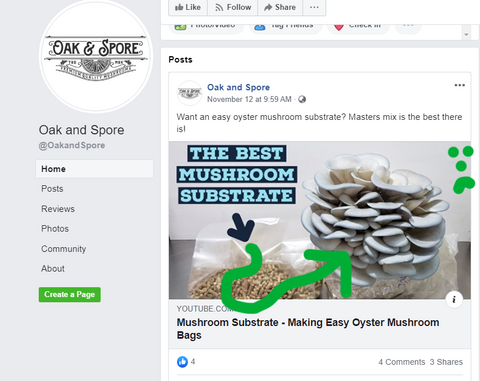
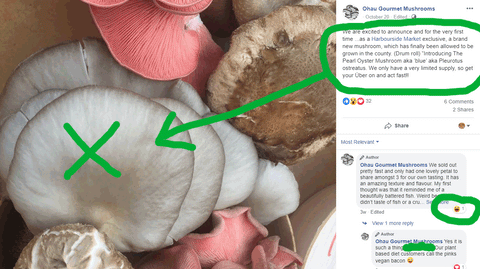
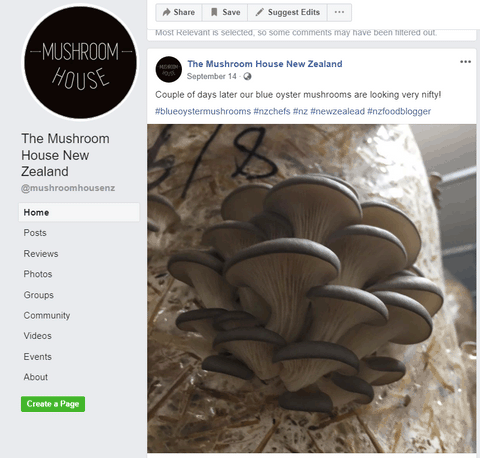
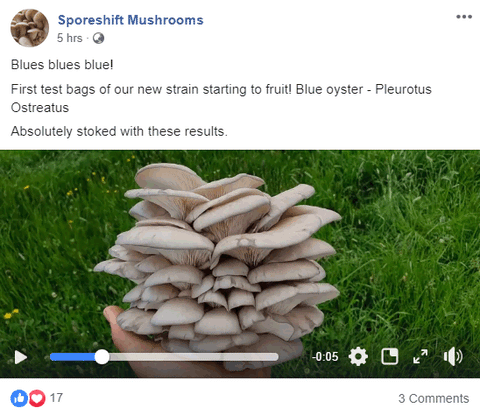
Oak & Spore, Ohau Gourmet Mushrooms, The Mushroom House New Zealand and Sporeshift Mushrooms publicly showed or promoted oyster-mushroom cultivation using colour names, crop photographs, videos and, in Sporeshift's case, the scientific-name claim P. ostreatus. Oak & Spore's published grow-room image shows grey and pink oyster mushrooms fruiting in the same room. The Mushroom House and Ohau posts present grey-blue crops as blue oyster, while Sporeshift describes a fruiting as a new blue-oyster strain.
Those are the businesses' visible practices and claims. Their screenshots do not show laboratory reports, culture provenance, import permits, specimen vouchers or an MPI finding. They therefore cannot establish whether the pictured cultures were the same Pleurotus sp. OB or hybrids tested by MPI. The official report confirms that unrecognised and hybrid material circulated among ten unnamed retailers; it does not identify which retailers they were.
MPI's published record proves that blue-oyster material sold as P. ostreatus tested as Pleurotus sp. OB, that purported P. ostreatus consignments tested as hybrids or POB and were reshipped or destroyed, and that POB and hybrid cultures traced through ten retailers were recalled. It does not name those retailers. The screenshots on this page do not provide a tested sample, chain of custody, permit or clearance file, proof of the organism's legal status at the relevant date, or evidence of the knowledge required by the Biosecurity Act. They support direct criticism of identity claims and traceability; they do not support declaring the four named businesses illegal.
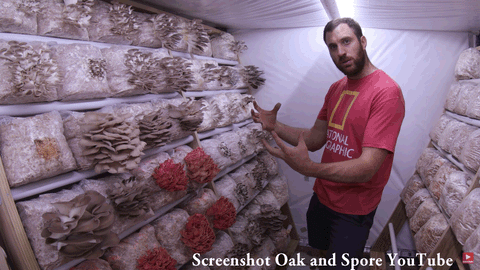
Evidence rule: business names are retained because the screenshots identify their pages. The page content can be reported accurately; identity, import history, legality and ecological effect require separate evidence. No screenshot here establishes a criminal or regulatory offence.
A responsible standard for growers and sellers
- Use a scientific name only when the culture record supports it. Keep the commercial nickname as an alias, not as the taxonomic evidence.
- Keep provenance attached. Record the supplier, culture code, country or collection locality, dates, permit or clearance documents, and every transfer between growers.
- Voucher important material. Preserve a dried fruit body and a living culture where possible, with photographs and collection data that connect them.
- Use appropriate DNA evidence. ITS may be a useful start, but the New Zealand research used ITS, LSU, RPB1, RPB2 and TEF markers to resolve difficult lineages.
- Control spores and waste. Harvest on time, filter or contain high-spore exhaust, and sterilise or securely dispose of spent blocks rather than releasing them outdoors.
- Pause distribution when evidence conflicts. Ask MPI about regulatory status and a mycologist or diagnostic laboratory about identity before selling or sharing the culture.
Related reading
- Pleurotus purpureo-olivaceus: identification and cultivation
- Pink oyster mushrooms in New Zealand
- Mushroom culture identity and provenance
- Blue oyster cultivation claims and responsible evidence
References
- Biota of New Zealand: Pleurotus parsonsiae
- Biota of New Zealand: Pleurotus purpureo-olivaceus
- Biota of New Zealand: Pleurotus australis
- Biota of New Zealand: Pleurotus pulmonarius
- Biota of New Zealand: P. pulmonarius var. aotearoa
- Biota of New Zealand: Pleurotus djamor
- Biota of New Zealand: Pleurotus ostreatus
- Hera et al. (2026): multi-gene phylogeny and P. pulmonarius var. aotearoa
- Hera (2024): Uniformity is a myth, University of Canterbury doctoral thesis
- Segedin, Buchanan & Wilkie (1995): compatibility among New Zealand Pleurotus
- Petersen & Ridley (1996): biological species in New Zealand Pleurotus
- Veerabahu et al. (2025): spread and ecological effects of escaped golden oyster mushroom in North America
- EPA decision APP203814: P. ostreatus is not a new organism
- EPA: microbes present in New Zealand, 2026 list
- EPA: how New Zealand defines a new organism
- Hazardous Substances and New Organisms Act 1996 (see section 25)
- Biosecurity Act 1993, section 52: communication of a pest or unwanted organism
- Biosecurity Act 1993, section 53: duties of owners of organisms
- MPI: steps and eligible species for importing fungi for growing
- MPI: identification testing for imported Pleurotus
- MPI consultation: species identity in imported mushroom spawn
- MPI Surveillance 46(3), 2019: investigation of a P. pulmonarius strain complaint
- MPI Surveillance 47(2), 2020: Pleurotus sp. OB sold as blue oyster and subsequent recall
- MPI Surveillance 47(1), 2020: imported cultures tested as hybrids or a different Pleurotus taxon
- MPI Surveillance 50(2), 2023: incidentally imported oyster hybrid investigation
- MPI: report an unusual organism
Images with embedded credits or third-party page content are retained for identification, reporting and critical discussion. Their appearance here does not imply endorsement by the people or businesses shown. Verify image licensing before final public publication.