Learn · Equipment
Mushroom Grow Bags, Filters and Gas Exchange
A bag contains substrate, limits unwanted exposure, and supports gas exchange. Choose it for the cultivation stage and the process it must survive.
Perforated straw containers and filtered grain or substrate bags have different jobs.
Material, filter, heat rating, closure, and capacity belong to the exact bag specification.
A bag filter does not replace ventilation around developing mushrooms.
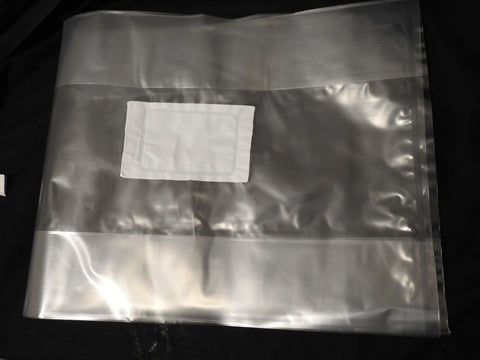
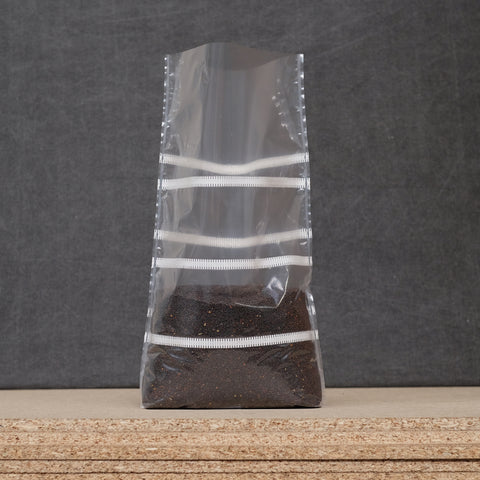
Start with the cultivation stage
A container for pasteurised oyster straw does not have the same requirements as one for sterile grain spawn. Decide what goes inside, how it is treated, and how it will be inoculated before selecting a bag.
| Container | Typical role | Main consideration |
|---|---|---|
| Perforated tubing or reusable bucket | Unsupplemented, treated oyster straw | Openings, drainage, cleanliness, and fruiting access |
| Filtered spawn bag | Grain colonisation | Compatible treatment, protected gas exchange, and aseptic transfer |
| Filtered substrate bag | Sawdust or other block production | Formulation, treatment, filter performance, and closure |
Choose the straw preparation method or grain spawn workflow first. A more elaborate bag cannot compensate for contaminated inoculum or inadequate substrate preparation.
Check the material and heat rating
Polypropylene, abbreviated PP, is commonly used in bags designed for steam sterilisation. Polyethylene, PE, is common in tubing and some growing bags, but it must not be assumed suitable for an autoclave. A plastic name alone is insufficient: film, filter, seams, and closure all need to withstand the intended process.
Check the exact manufacturer's model and instructions rather than applying one bag's rating to all bags. Heat-resistant construction does not mean an unlimited service life or permission to exceed a rated temperature. Plain tubing without documented compatibility should be used only within the supplier's stated limits. Keep unfilled bags clean, dry, and protected from damage.
What a filter can and cannot tell you
Growing mycelium consumes oxygen and releases carbon dioxide. A filter allows gas exchange while reducing the entry of unwanted particles and organisms. Performance depends on the whole filter system, its area, construction, and how it is used.
A stated 0.2-micrometre rating is not a universal guarantee of sterility, and nominal ratings should not be treated as absolute barriers. Some bags use a membrane patch; others use nonwoven depth-filter seams that capture particles within a fibre network and have no directly comparable micron rating. Film thickness in micrometres describes plastic, not filtration.
A smaller advertised pore size is therefore not automatically the best choice. Compare the manufacturer's intended application and gas exchange information, then test the bag with your strain, fill, and process.
Capacity, headspace, and closure
Bag dimensions do not establish a safe filling mass. Loose straw, wet grain, and compacted sawdust differ in density. Record formulation and hydrated mass, stay within documented capacity, and leave clean upper bag area for inoculation and closure.
Pack consistently and avoid sharp straw ends damaging the film. Position the filter as instructed, keeping it unobstructed and away from wet substrate where required. A “zipper filter” may describe filter seams rather than a resealable opening; check the closure. Inspect seals for gaps and trapped substrate.
Heat treatment is a process, not a pressure number
A statement such as “autoclavable at 15 psi” describes too little to establish sterilisation. Air removal, steam exposure, temperature, time, filling mass, and load arrangement all influence the result. The centre of a large block heats more slowly than its outside. An indicator that changes colour is useful process information, but is not proof that every part of a substrate load is sterile.
Follow the bag manufacturer's pre-treatment closure instructions and the pressure vessel's operating manual. Some bags are designed for sealing before treatment, while others require a different procedure. Never seal an unknown bag on the assumption that its filter will safely relieve pressure. Keep bags clear of valves and vents, and do not open a pressurised vessel.
Protect material during cooling and inoculation
Allow treated material to cool before introducing live mycelium. Use an appropriate clean transfer setup for sterile grain or supplemented blocks: controlled airflow or a suitable still-air workspace, clean tools, and a method that minimises exposure of the opening. A wiped kitchen bench alone does not create sterile conditions.
Keep the inside of the bag and closure away from hands, clothing, and dirty surfaces. Complete the transfer efficiently, close the bag according to its instructions, and label the culture, substrate, and batch. See agar and culture basics for culture checks before expansion. The bag protects a correctly prepared culture; it cannot clean a contaminated one.
Incubation gas exchange and fruiting ventilation
During incubation, use the culture's temperature guidance and allow space around bags. Inspect growth through the film rather than repeatedly opening a protected container. Keep filters exposed as intended; pressing them against another bag or shelf can change their performance. Large blocks may generate heat, so the room temperature alone does not describe every block's conditions.
Fruiting requires a different environment. Developing oysters need fresh air around their fruiting openings as well as suitable humidity and light. A filter inside an otherwise stagnant room cannot control that room's carbon dioxide. Avoid a drying blast directly onto mushrooms, but provide ventilation that replaces stale air. Use species-specific guidance when deciding when and where to cut or open a fully colonised bag.
Inspect problems and assess reuse realistically
Check bags for torn film, failed seams, wet filters, and unusual growth. Condensation by itself does not identify contamination. Spreading coloured mould, wet breakdown, or abnormal stalled areas require isolation and investigation; opening suspect bags beside clean cultures can spread contamination.
Do not assume a bag remains a reliable sterile barrier after harvesting cuts, repeated heat cycles, or abrasive cleaning. Reuse only where the manufacturer's instructions and the cultivation method support it. Reusable buckets can reduce disposable plastic in an appropriate straw process, provided they can be thoroughly cleaned between crops. Record failures alongside filter choice, filling mass, and handling so that equipment changes are based on results rather than claims of faster growth.