New Zealand growing guide
How to Grow Mushrooms on Logs in New Zealand
A freshly cut log can provide a long-lasting substrate for a wood-growing mushroom. Successful log growing starts with the right wood and culture, followed by shade, moisture and patience.
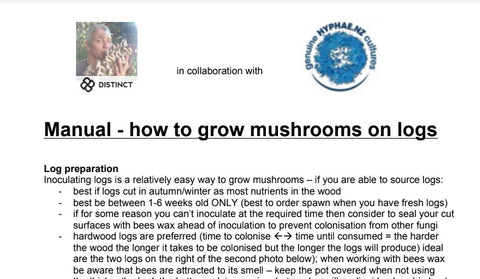
The illustrated log-growing manual
Ellen Schindler's four-page manual covers log preparation, dowel inoculation, incubation, fruiting and a simple record sheet for comparing wood and mushroom strains. Keep it beside you while preparing your first logs.
Read the PDF manual Download a copyChoose the wood and the mushroom together
Start with freshly cut, sound hardwood with intact bark. Avoid wood that is already visibly decayed or colonised by other fungi. The best tree species depends on the mushroom being grown: there is no single log that suits every culture. Ellen's manual discusses oak, poplar, willow, liquidambar and birch as possible woods for its methods. Check the requirements of your identified culture before choosing among them.
Cut logs to a length and weight you can safely lift and, if needed, fit into a soaking container. Use cut wood rather than inoculating a living tree. Arrange the spawn and tools before cutting or collecting logs so inoculation can happen while the wood is still fresh. Research on shiitake log production favours prompt inoculation; long delays increase the chance that competing fungi or drying will get ahead of the intended culture.
From log to harvest
- Prepare a clean work area. Gather the logs, drill, appropriately sized bit, identified dowel or sawdust spawn, hammer or inoculation tool, wax, brush and labels. Keep spawn protected until you are ready to use it.
- Drill and inoculate. Follow the hole spacing and depth recommended for the spawn you have. Staggering rows spreads inoculation points around the log. Seat the spawn firmly so it contacts the wood.
- Seal and label. Cover the inoculation points with suitable wax and label each log with the tree species, fungal culture and inoculation date. Waxing log ends is a choice growers make according to drying conditions; it is not a universal requirement.
- Incubate. Store logs in a shaded place with airflow and access to water. Raise them off bare soil and protect the bark. Check more often during hot, dry or windy periods and water when needed to prevent the logs drying out.
- Watch for fruiting. Fruiting may begin only after many months of colonisation. Record the first flush and check the identity of every mushroom before harvesting for food.
Growing in New Zealand conditions
Site conditions matter more than a calendar rule. An exposed Canterbury yard can dry logs much faster than a sheltered, humid site, while a warm northern location may need deeper shade and closer moisture checks in summer. Place logs where you can inspect them easily, add water and allow air to move around the stack. Shade cloth can help where year-round tree shade is unavailable.
Keep notes on how each tree and mushroom pairing behaves. Fruiting times reported for one species or climate should be treated as a starting estimate, not a promise for every New Zealand site.
When should you soak a log?
Natural changes in rain and temperature can trigger fruiting. Some well-colonised shiitake logs can also be soaked to produce a more predictable flush, then rested before another attempt. This technique should not be assumed to work equally for oyster mushrooms or every other log-grown species. Do not force a newly inoculated log before the fungus has had time to colonise it.
Keep a record for each log
The manual ends with a useful record sheet. At minimum, write down the tree species, date cut, date inoculated, mushroom culture and source, location, watering or soaking, first fruiting date and harvests. These details make it possible to compare results and notice which wood and site combinations work in your conditions.
Culture provenance and biosecurity
Use a correctly identified, traceable culture and keep its label with your log records. A trade name such as “oyster mushroom” does not identify a species or establish where the culture came from. MPI has specific requirements for importing fungal cultures and mushroom spawn into New Zealand; check those requirements before arranging any import.
Take wood and fungal material only with the landowner's permission. Collection or research on public conservation land may require DOC authorisation. Keep different cultures labelled and avoid moving colonised logs or spent wood into native habitats without permission.
Related reading
- Oyster mushrooms in New Zealand: species and biosecurity
- Pleurotus purpureo-olivaceus: identification and cultivation
- Ready-to-grow oyster mushroom bag instructions