Culture and spawn
Liquid Culture for Oyster Mushrooms in New Zealand
Liquid culture is living fungal mycelium growing in a sterile nutrient broth. It can start grain spawn or another prepared medium, but the liquid's appearance alone cannot prove that the culture is pure, correctly named or of New Zealand origin.
What is liquid culture?
In a mushroom-growing context, liquid culture usually means mycelium already growing in a prepared liquid nutrient medium. A spore syringe instead contains spores in liquid. They are different starting materials: spores may germinate into new genetic combinations, while an established culture propagates the mycelium that was put into the broth. Neither label by itself establishes species identity or cleanliness.
The broth can allow mycelium to expand and be transferred into sterile grain or another suitable medium. Because other microorganisms can also grow in a nutrient-rich liquid, the starting culture and every transfer need careful quality control. “Fast genetics,” “never tired” and a high-yield promise are not properties that can be confirmed from a photograph or the volume printed on a syringe.
Where liquid culture fits in a grow
Growers commonly begin with an identified mother culture, confirm it is clean, expand it under aseptic conditions, and use the resulting mycelium to prepare spawn. The amount to transfer depends on the culture, medium and vessel; a “10 ml” syringe states its volume, not a universal inoculation rate. Grain and substrate must be prepared for the chosen method, and inoculated only after cooling.
For the later stages, see the two-step growing bag guide and the hardwood and soy hull substrate guide.
How to assess a culture before using it
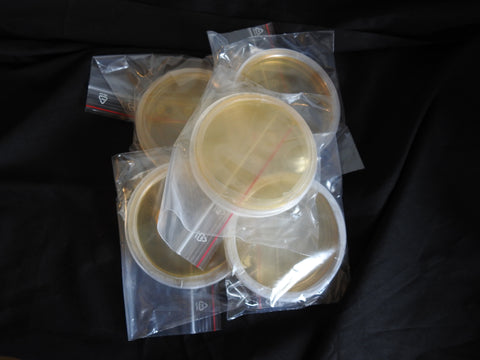
A batch record should identify the source culture, date of preparation, medium, batch and any test result. A small sample grown on appropriate agar can reveal competing growth that is difficult to judge through the liquid. Agar testing is a useful quality check, but a clean-looking plate still does not establish that the scientific name or geographic origin on the label is correct; those require separate evidence.
- Do not rely on appearance alone. Wispy white growth may be expected mycelium, but cloudiness or a lack of visible discoloration cannot conclusively rule contamination in or out.
- Keep transfers traceable. Label each culture and preserve the link to its mother culture and any specimen or laboratory record.
- Separate suspect cultures. If a test shows unexpected growth, do not distribute or use that batch to inoculate more material.
- Follow the culture's storage guidance. Viability and storage life depend on the organism and medium; no liquid culture lasts indefinitely simply because an earlier stock was frozen.
A name on a syringe is a claim to verify
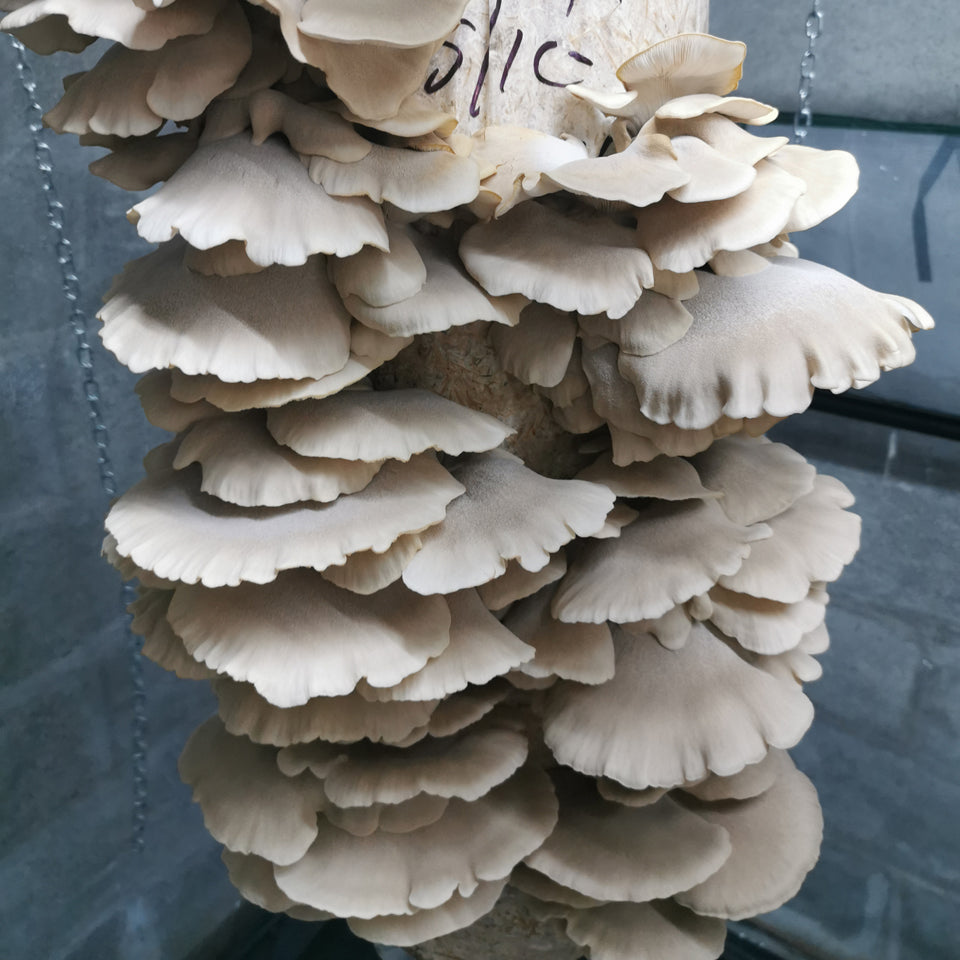
“Oyster mushroom” covers multiple Pleurotus species. A useful identification links the living culture to a documented specimen, reliable diagnostic work or a trusted collection record. For a claim that a particular strain is native to New Zealand, ask where its source specimen was collected, how the culture was maintained, and what testing supports the identification. Fruiting-body photographs alone are not enough to prove a strain's lineage.
MPI requires imported mushroom cultures and spawn to meet biosecurity conditions, including species eligibility, permits and clearance. Rules for an imported culture are not inferred from a supplier's marketing description. Check the current MPI process before bringing living fungal material into New Zealand.
Pleurotus parsonsiae: indigenous is not the same as endemic
Pleurotus parsonsiae is a named oyster mushroom recorded from New Zealand. Biota of NZ currently records it as indigenous, non-endemic, meaning it occurs naturally here but is not confined to New Zealand. The entry also places it in the P. djamor species complex. A particular liquid culture labelled P. parsonsiae still needs its own identity and origin records; the species' occurrence in New Zealand does not prove that every culture offered under that name came from a New Zealand specimen.
Common questions
Can I inject liquid culture directly into any substrate?
No. The receiving medium must be suitable for that culture, prepared and cooled using a validated method, and inoculated under conditions that limit contamination. Many growers first establish healthy grain spawn because it can distribute mycelium throughout a larger substrate block.
Does a clear liquid mean the culture is clean?
No. Appearance can suggest a problem, but cannot replace an appropriate culture test. Conversely, visible mycelial clumps do not prove purity.
Does cold storage “reset” a culture?
Well-managed long-term stocks can help preserve a documented lineage. That does not make every expanded batch immune to contamination, mislabelling or changes in performance. Keep records and test each production batch as needed.
Related reading
- Mushroom culture identity and provenance in New Zealand
- Oyster mushrooms in New Zealand: species and biosecurity
- Two-step oyster mushroom growing bag guide