Mushroom species · New Zealand
Pleurotus parsonsiae: a Native New Zealand Oyster Mushroom
Pleurotus parsonsiae is an indigenous oyster mushroom recorded in New Zealand. Accurate names and culture histories matter because its relationship to the djamor group is taxonomically complex.
Pleurotus parsonsiae
Indigenous; non-endemic
Member of the Pleurotus djamor species complex
Use the culture record, not colour or size alone
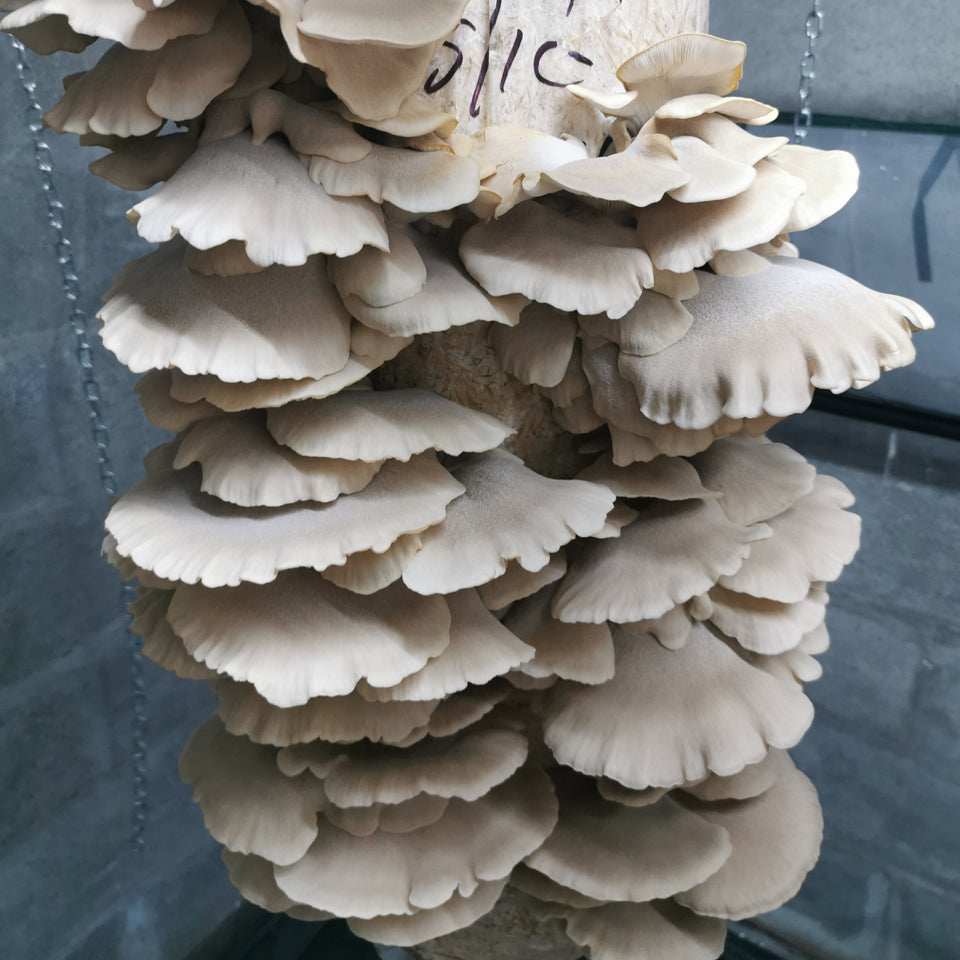
Native does not mean unique to New Zealand
Pleurotus parsonsiae is recorded as indigenous and non-endemic: it occurs naturally in New Zealand, but its recorded range is not restricted to this country. It is also associated with Australian and Pacific material. Calling the species endemic would therefore give readers the wrong impression of its distribution.
The accepted spelling is parsonsiae. The spelling parsonsii occurs in its original description and some subsequent literature. Multi-gene research supports distinguishing indigenous P. parsonsiae from imported P. djamor, despite their close relationship within the P. djamor species complex. These names should not be used interchangeably for an unidentified culture.
Recognising the oyster form
The described mushroom has a pale fawn cap, cream-coloured gills that extend down the attachment, and a short lateral stem. A white spore print belongs to the recorded description. Size and cap shade overlap with other oyster mushrooms; an unusually large fruiting body is not a species diagnosis.
For an observation, photograph the cap, gills, attachment and substrate before handling it. Include a scale. A useful identification may need microscopic characters and sequence evidence interpreted against authenticated reference material. A common name such as oyster mushroom cannot supply those missing details.
Wood associations and documented material
New Zealand records connect this fungus with several kinds of woody substrate, including tī kōuka or cabbage tree. An authenticated culture, ICMP 11565, was collected from Cordyline australis material and has an identification supported by ITS and LSU sequence records.
A documented collection is an example of how evidence can follow a culture: collection details, a preserved specimen, a living isolate and identification history can be linked. Those records authenticate the named reference material. They do not prove that a separately supplied bag of spawn comes from that material.
Building a cultivation record
Begin with the exact culture code and whatever growing records accompany it. Ask which substrate has produced fruiting bodies and which conditions were actually measured. Keep species names distinct from supplier strain names, even when both appear on the same label.
The grain spawn guide explains the role of a clean inoculum. The log-growing guide covers inoculation and moisture management for wood. Apply a reported successful method to a small batch first, rather than treating the performance of one isolate as a guarantee for the species.
For a substrate comparison, label each batch with its ingredients, dry weights, water addition, treatment and inoculation date. Keep the culture and other conditions consistent between batches. Record the interval to visible growth, full colonisation, first pins and harvest separately.
Measure harvested mass and record the number of batches that failed. If an impressive cluster came from one block, preserve the block details and the results from its companions. Without those comparisons, claims such as high yield or fastest growth are difficult to assess.
Traceability through a difficult species complex
Keep the laboratory result itself where DNA identification has been performed. It should identify the tested culture, marker, sequence or accession, and the basis of the determination. ITS alone may not distinguish closely related Pleurotus lineages. A statement that a supplier uses DNA testing does not establish that every batch has been checked.
When a name changes, preserve the previous determination in the culture history and attach the updated name to the same code. Do not silently combine records from differently named isolates. A clear identification history makes later comparisons possible, even when the taxonomy remains under discussion.
Local occurrence and overseas import eligibility are separate questions. Before bringing in a culture, establish its identity and meet MPI import requirements; an organism legally new to New Zealand needs EPA approval. A native species label alone cannot establish compliance for a shipment.