Mushroom species · New Zealand
Brown Oyster Mushroom: Pleurotus australis
Pleurotus australis is an indigenous, non-endemic oyster mushroom. Its natural wood associations and documented cultivated specimens are useful evidence, while growing performance needs to be recorded for each culture.
Pleurotus australis
Indigenous; non-endemic
Brown oyster mushroom
Cultivated fruiting bodies are documented; performance is culture-specific
A named species, not a brown colour category
Pleurotus australis is recorded as indigenous to New Zealand and non-endemic. Australian material is also part of its documented taxonomic history. The common description brown oyster mushroom is useful, but it is not precise enough to identify a wild collection or a culture.
Other oyster mushrooms may have brown caps. Conversely, the shades recorded within P. australis vary. When comparing growing results, use the scientific name and culture code rather than grouping everything sold or photographed as a brown oyster into one species.
Features to record for identification
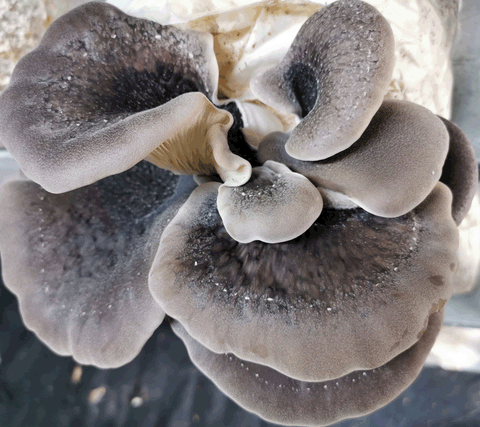
Published New Zealand descriptions include fleshy brownish caps, white to cream gills running down the stem or attachment, and a stem that may be lateral, off-centre or absent. A white spore print is recorded. The mushroom may appear singly or in overlapping groups on wood.
Record the complete mushroom before collecting a sample: cap surface, gill attachment, stem base, scale and the substrate it grows from. These features support identification, but they do not replace microscopic examination or a qualified determination where similar fungi are present. A reference photograph is an illustration, not evidence that a separate spawn culture is correctly named.
Natural substrates and what they mean for growers
Documented New Zealand wood associations include mānuka, kānuka, karaka and kōwhai. Some mushrooms have been found apparently growing from the ground because the wood or roots are buried. Substrate records should therefore describe what is actually visible rather than assuming a mushroom emerged from soil alone.
A host association is a field observation. It does not establish the best cultivation timber or justify cutting native trees. Use lawfully obtained wood, identify the material and keep its source in the growing record. For inoculation methods and log care, see the New Zealand log-growing guide.
Documented fruiting is a starting point
Cultivated fruiting bodies are included among the material examined in the New Zealand taxonomic work on P. australis. This supports the possibility of producing mushrooms from culture. It does not establish that every isolate fruits readily or that a fixed bag recipe will perform reliably.
In a controlled comparison, it was grown at lower humidity than the other species, preventing a direct statistical comparison of their results. Environmental treatments matter when judging growing performance.
Seek records for the actual culture being used: substrate composition, treatment, inoculum, conditions and outcomes. Establish whether a report describes mycelial colonisation, the first small mushrooms, or a complete harvest. Those are separate stages and should have separate dates.
Before scaling up, compare a few small, clearly labelled batches. Record the dry weight of each ingredient and the amount of water added. Note the wood species, particle size, supplement and treatment method. Keep the culture constant so that any difference between batches can be interpreted.
Photograph development consistently and record contaminated or unsuccessful batches. If one substrate works, repeat it under the same conditions before calling it reliable. A striking photograph or one large cluster can document a result; it cannot establish average productivity by itself.
Recording conditions in a New Zealand growing space
Local conditions need measurements. Record temperatures near the growing material, changes in moisture, the fruiting arrangement and observations about airflow. A region name such as Canterbury or Auckland cannot describe the conditions inside a particular room, bag or sheltered log stack.
If conditions are changed to trigger fruiting, record the change and its timing. This makes the next trial comparable. Start with evidence tied to your culture instead of adopting a temperature range from a guide written for another Pleurotus species.
Maintain the culture's identification and transfer history. Local native status does not automatically permit an overseas culture import: MPI requirements apply to the consignment, and organisms legally new to New Zealand require EPA approval.