Mushroom species · New Zealand records
Pleurotus purpureo-olivaceus: Species Reference
Multi-gene research recognises this distinctive woodland oyster as an indigenous New Zealand lineage. Producing a dependable crop of fruiting bodies remains an experimental challenge.
Pleurotus purpureo-olivaceus
Treated as indigenous in multi-gene research; database origin remains uncertain
Frequently documented on native beech wood
Cultures grow, but tested strains failed to fruit in a controlled experiment
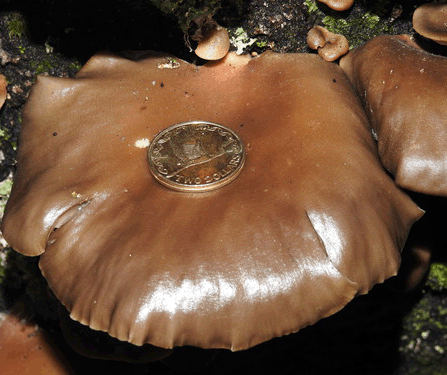
An indigenous lineage and its wider distribution
Pleurotus purpureo-olivaceus is a recognised species with New Zealand collections and living culture records. Multi-gene research treats it as a distinct indigenous New Zealand lineage, while its taxonomic database record still marks geographic origin uncertain. These are different assessments of the available evidence.
Sequence comparisons also support Australian occurrence; some records suggesting South Korea have misleading origin metadata. Its wider distribution needs further sampling. Treating the fungus as indigenous to New Zealand does not establish that it is endemic, or authenticate the origin of a particular culture.
The names Resupinatus purpureo-olivaceus and Pleurotus rattenburyi appear in its taxonomic history. Keeping these names alongside the current determination helps connect relevant literature and specimen records.
Appearance and identification limits
Descriptions include violet to deep brownish violet caps, pale silvery-grey gills, a short off-centre or lateral stem, and a rubbery texture. The gills extend down the stem and the recorded spore print is white. Colour alone cannot distinguish it from every other dark oyster-shaped fungus.
Photograph the mushroom in place, including its attachment and the wood it grows from. Add underside and stem photographs with a scale. Expert identification may need microscopic characters and DNA evidence interpreted against reference material. An attractive cap photograph or a familiar common name is not sufficient authentication.
Beech wood and other records
New Zealand records frequently associate this species with dead beech wood. Documented collections include material from Tongariro and Wellington, as well as the South Island. Its role as a wood-inhabiting fungus is an appropriate starting point for study.
Recording the wood precisely is useful. Where the host can only be identified as beech, say so rather than assigning a species from guesswork. A field association does not establish the optimum wood for a prepared substrate or justify removing fallen timber from protected land.
Culture growth and mushroom production
Living isolates are held in research collections, and work with the fungus in culture is established. A controlled cultivation experiment produced mycelial growth, but none of the tested P. purpureo-olivaceus strains fruited before data collection ended after 78 days. Pilot trials using cold shocks and different temperature and humidity settings also failed to induce fruiting.
These are results for the tested strains and treatments, not proof that cultivation is impossible. Growing mycelium and producing fruiting bodies are different outcomes. Neither colonised grain nor an agar photograph establishes a reliable substrate formula or fruiting temperature.
Use a documented result for the exact isolate as the basis of a small trial. Ask whether a record includes verified fruiting bodies, measured conditions and repeat results. Preserve the original culture code through transfers so observations remain traceable. Where the identity is provisional, retain that qualification.
Making a growing trial useful
Record substrate ingredients by dry weight, water addition, particle size, treatment and inoculation date. Keep comparable batches together and alter one factor at a time. Record visible colonisation, pin formation and any harvest as separate stages.
Retain unsuccessful results. A block that remains white without producing mushrooms is not evidence of commercial viability; a single successful block is a reason to repeat the conditions. Photographs with dates and scales make the observations easier to compare.
The log-growing guide and grow-bag guide explain general methods and equipment. They are not species-specific fruiting instructions for P. purpureo-olivaceus.
Preserve collection locality, identification evidence and transfer history. An overseas culture needs its own identity and import checks under MPI requirements, with EPA approval where legally required. Its resemblance to a New Zealand mushroom cannot establish clearance or provenance.